
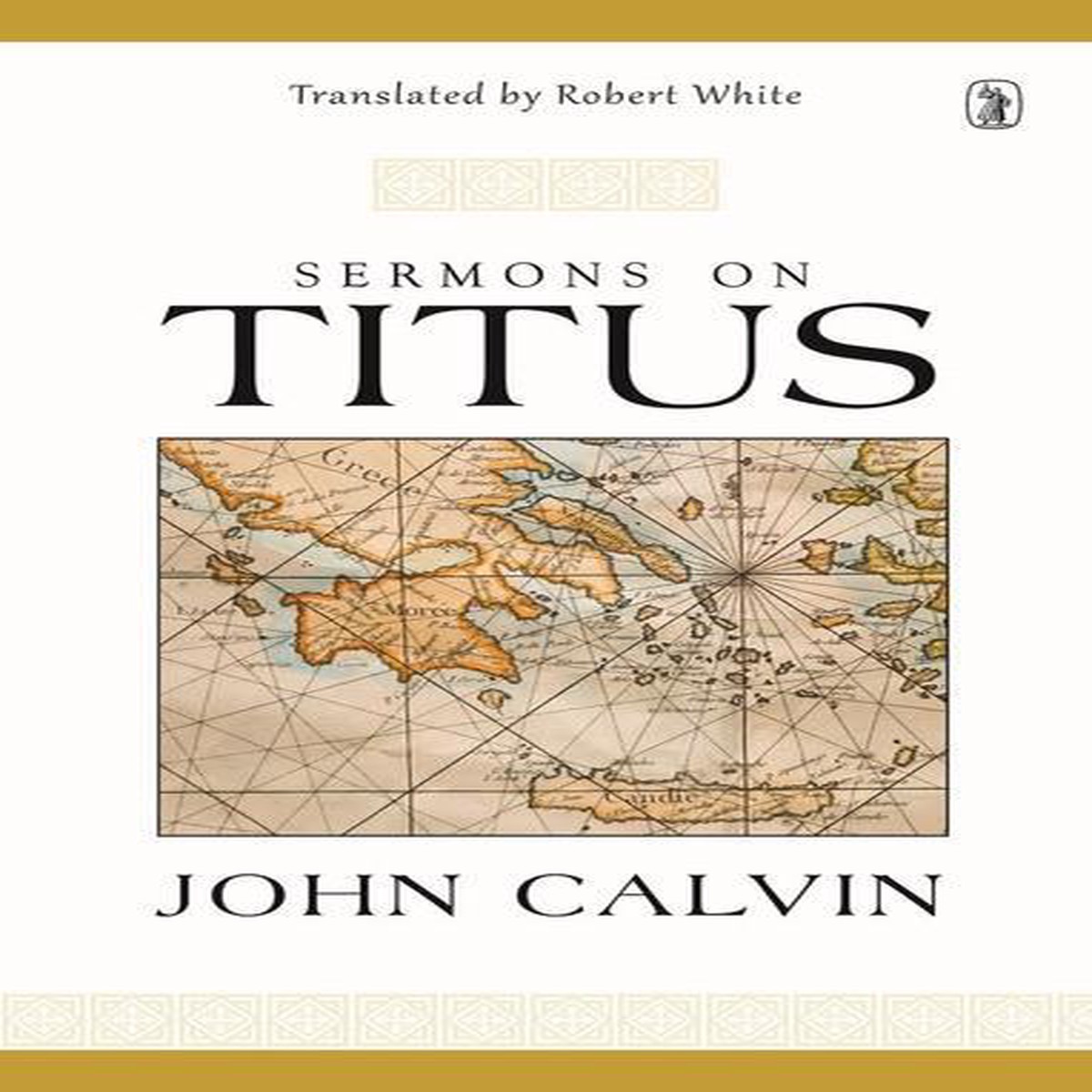
Sermons on Titus
Original price was: $26.60.$21.28Current price is: $21.28.
Calvins expository sermons to the great congregation of St Peters, Geneva, taken down in shorthand and then published across Europe, were among the most sought-after volumes of the sixteenth century. In the late 1570s, translated from the French, these bulky volumes flowed through Londons bookshops and none was more popular than the One hundred Sermons on the Epistles of St Paul to Timothy and Titus which appeared for the first time in 1579. The public demand was understandable. First, Calvin opened the Scriptures, not in these volumes for students only, but for the whole church. Second, the sermons were preaching in the full New Testament sense of the term, that is, proclamation and persuasion, with power and conviction.
For the first time in more than 450 years, Calvins Sermons on Titus have been translated afresh into English. These sermons are not merely an updating of the language of Laurence Thomsons 1579 English translation (which, along with Calvins Sermons on 1 and 2 Timothy, was previously reprinted in facsimile by the Trust in 1983). Robert Whites new translation goes back to Calvins original French, and the result is a fine modern English translation that will make the reader feel something of the excitement of those Elizabethan Christians who so prized their own contemporary English version of Calvins sermons on this pastoral epistle.
While the seventeen sermons in this volume were preached by Calvin between August and mid- October, 1555 during the course of his regular pulpit ministry in Geneva, they are far from being mere historical curiosities. Along with concern for irreproachable leadership, faithful teaching and the spiritual well-being of the churchs members, the apostles letter to Titus sounds a strongly ethical and evangelistic note in its emphasis on upright living, by which God is honoured and outsiders are drawn to the faith as they witness the power and grace of the gospel.
Accordingly, in these sermons Calvin consistently stresses the centrality of Gods revealed word in the collective life of the church, and the necessity for each believer to conform in holiness and uprightness to Gods standard of purity. A wholesome life is, through the Spirits gracious work, both the consequence and the accompaniment of wholesome teaching. Inconsistency of conduct is not, however, easy to avoid, and the world will rightly condemn Christians who say one thing and do another. Transformation into Christs likeness is the work of a lifetime. Enrolled in Gods school, believers are urged to profit each day, growing not only in knowledge but also in love, and not for their own sake only but for that of their neighbour, to whom they are bound by ties of humanity and brotherhood. In this way the church is strengthened, its witness is confirmed and tangible proof is given that it is what it claims to be the community of Gods redeemed on earth. The sermons on Titus reveal the heart of Calvin the pastor, the shepherd of Gods flock, whose members are nourished by the word of truth, made one with Christ by the Spirits regenerating power, adopted into Gods family and promised a heavenly inheritance which cannot fail.
Let us call upon our good God and Father, since all fullness of wisdom and light is found in him, mercifully to enlighten us by his Holy Spirit in the true understanding of his word, and to give us grace to receive it in true fear and humility. May we be taught by his word to place our trust only in him and to serve and honour him as we ought, so that we may glorify his holy name in all our living, and edify our neighbour by our good example, rendering to God the love and obedience which faithful servants owe their masters, and children their parents, since it has pleased him graciously to receive us among the number of his servants and children. Calvin’s prayer for illumination before the sermon
Related products
-
Sale!

He Descended to the Dead: An Evangelical Theology of Holy Saturday
Original price was: $28.50.$22.80Current price is: $22.80. -
Sale!
Handbook for Missionary: Obeying the Great Commission
Original price was: $8.55.$6.84Current price is: $6.84. -
Sale!
Gospel Meditations on the Reformation
Original price was: $11.00.$9.00Current price is: $9.00. -
Sale!
Growing Downward: The Path of Christ-Exalting Humility
Original price was: $17.10.$13.68Current price is: $13.68.

Reviews
There are no reviews yet.